Astrophotography is one subset of photography that I’ve only done a little bit, but would really like to try more. Maybe that is because it requires me to be patient, stay up late, and go to an area without light pollution. Luckily, I am currently planning a camping trip with the purpose of doing some astrophotography and some general nature and landscape photography.
In preparation for the trip, I decided to build a star tracking mount to help take pictures that appear stationary despite using long exposure times and the movement of the stars. That apparent motion in the sky causes star trails, which are a very fun and appealing image to make, but don’t accurately depict the sky.
I decided to build this mount that I found on Instructibles. I did make a few minor adjustments to better suit the materials that I had on hand, like the battery pack and microcontroller because I didn’t have the ones that the author used.
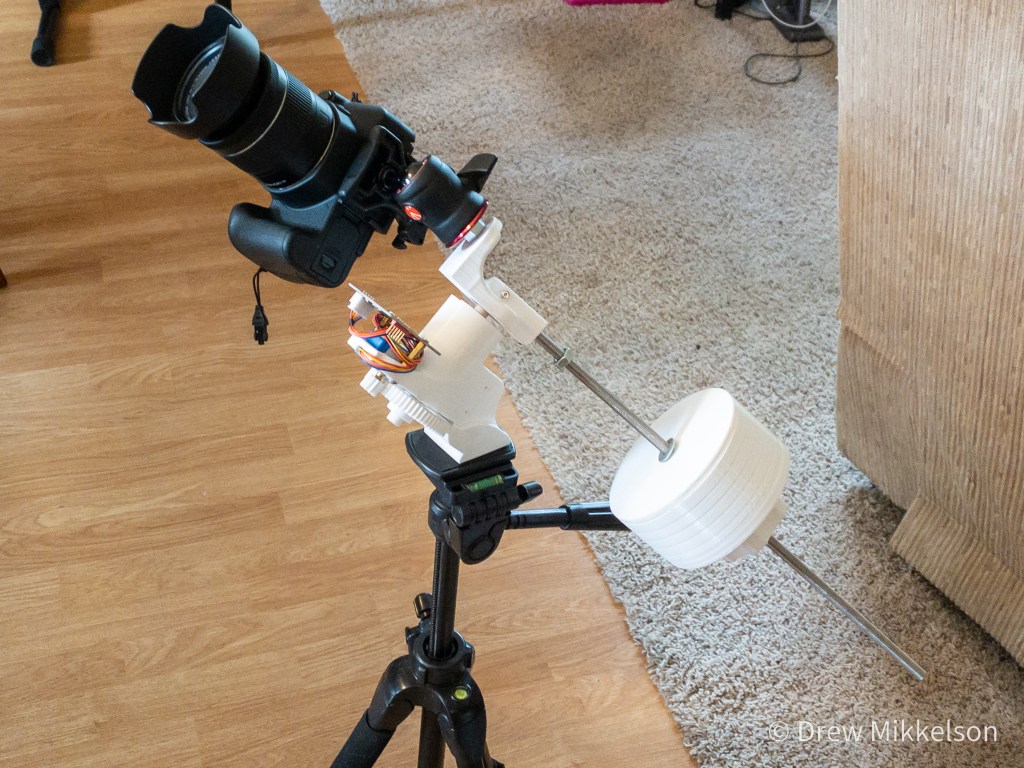
Star Tracking Mount 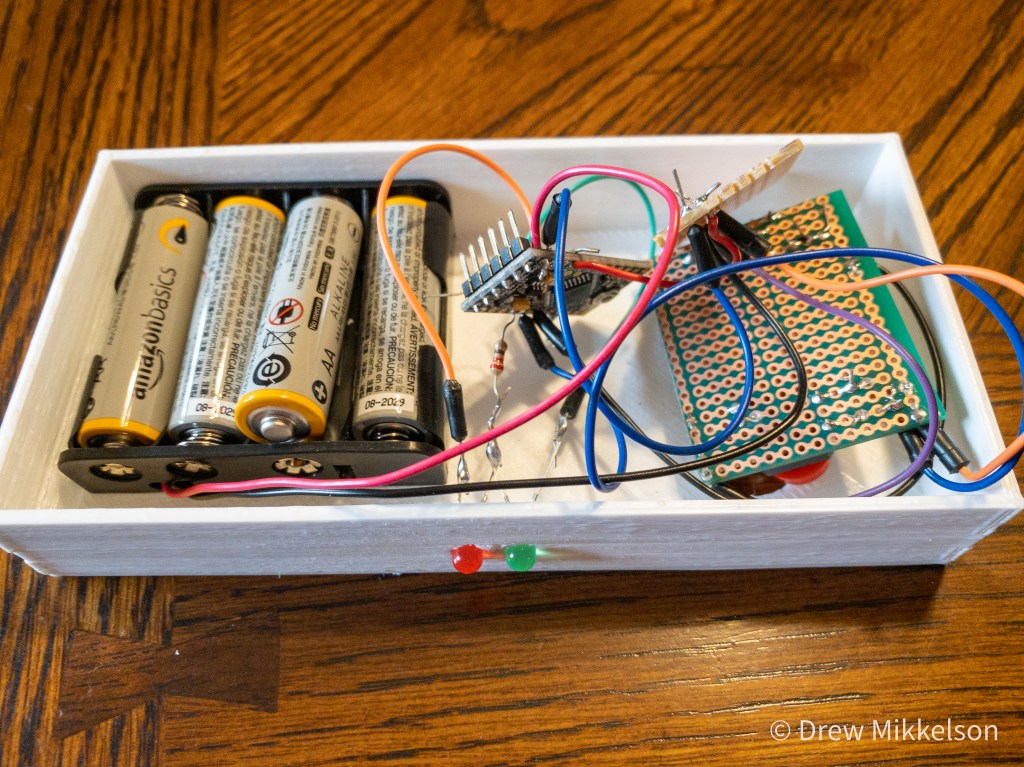
Controller Box
I 3D printed the device using my Creality CR-20 Pro printer and assembled everything. Then I built the controller circuit inside a separate box using an Arduino Pro Micro due to its small size and ease of programming. The main shaft of the mount is aligned with Polaris, and once it is turned on, the camera should follow the subject as it moves across the sky. The motor drives the main shaft with a gear ratio of 1:60 and the motor moves in small pulses known as “steps.” The Arduino microcontroller drives the motor by commanding it to move one step and then repeat after a set interval. In order to match the motion of the stars, the device must rotate at a rate of one revolution per sidereal day, or 23 hours and 56 minutes. Based on the specs of the motor used and the gear ratio, this works to moving one step every 3.523 seconds. This is so slow that in my testing, I haven’t been able to see it actually move with my naked eye, which isn’t too surprising because we can’t see the motion in the sky at night.
There is one small problem with my mount, but it shouldn’t cause me any trouble with my use. In order to capture an image of the sky without star trails or streaks, we use the “500 rule” in which the the maximum exposure time is determined by dividing 500 by the focal length of the lens being used. For crop sensor cameras, the number used is 300 because of the crop ratio. Because my SL2 uses a crop sensor, I used the 300 rule to determine that the longest focal length available to me using this mount is 85mm. This isn’t a big problem for me because I don’t plan to use my 75-300mm lens for astrophotography because of the weight of the lens. Instead, I plan to use my trusty 50mm and open the aperture up to f/1.8 to let in as much light as possible.
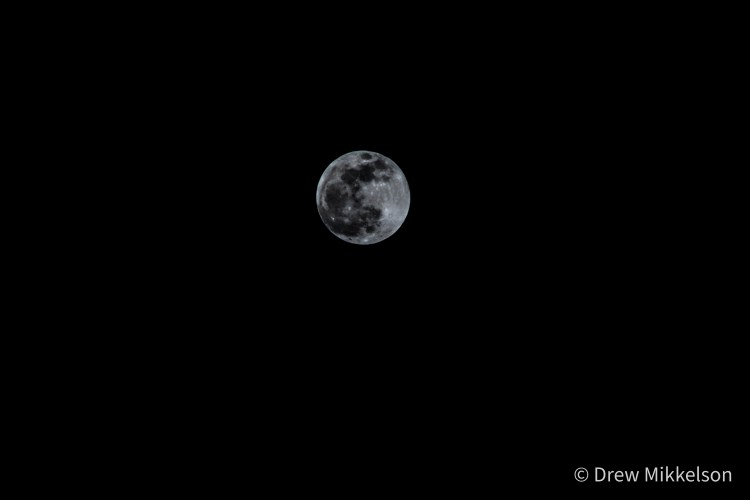
Hopefully I will get some good images when I go camping tomorrow night! In the meantime, here are some images from the 2019 lunar eclipse.
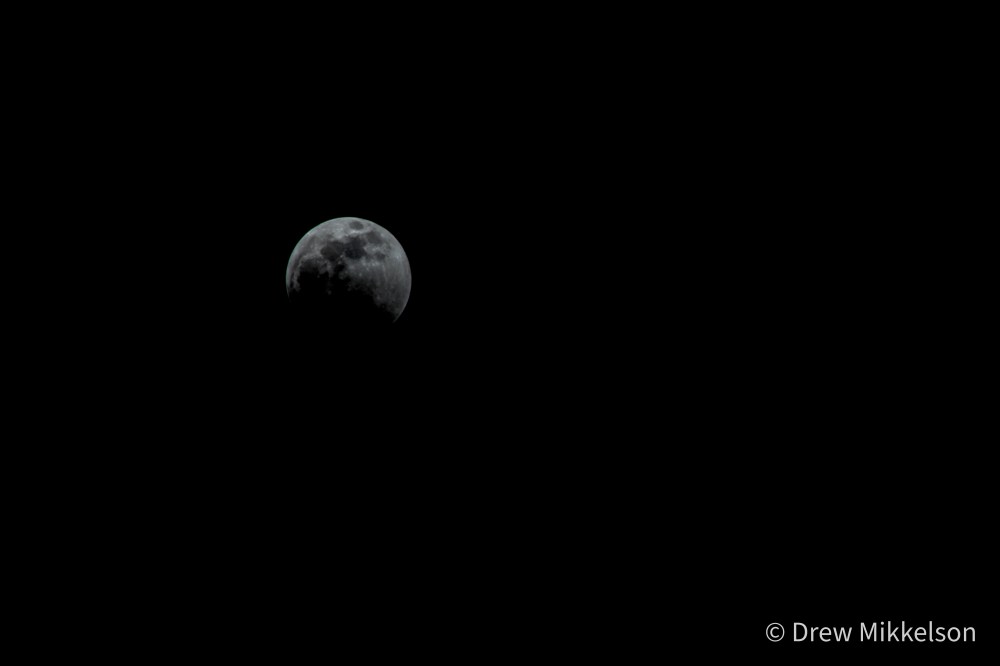
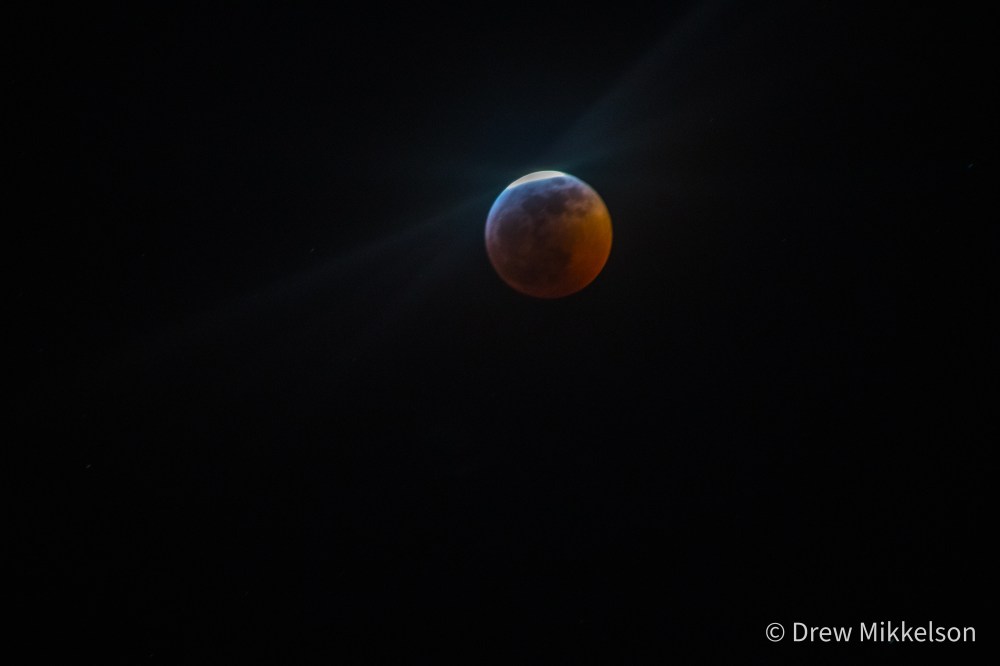

 Drew Mikkelson Photography
One thought on “Astrophotography”